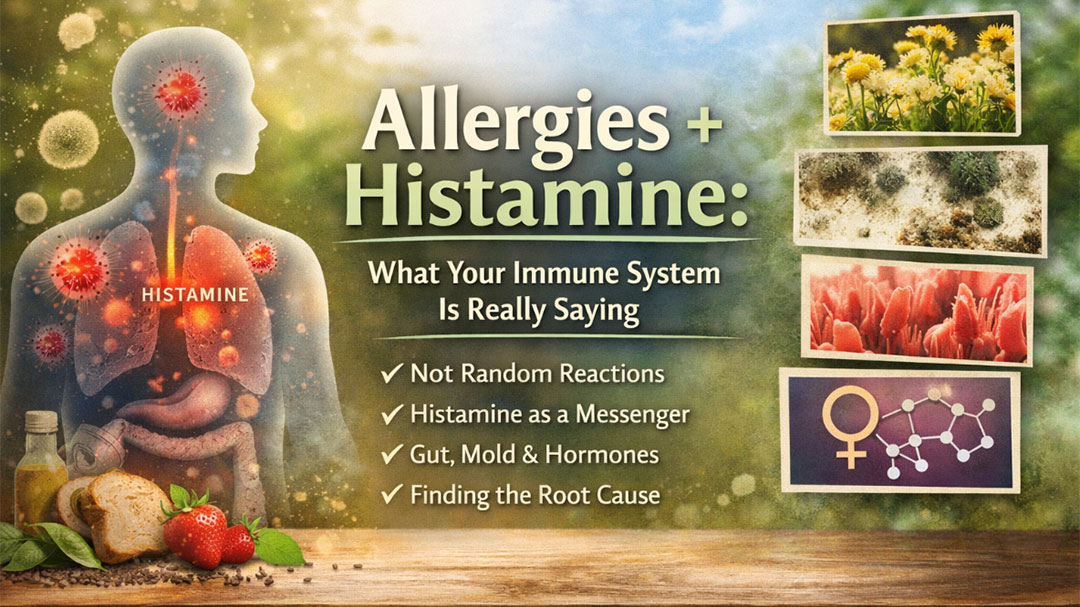
Every year when allergy season hits, the same conversation starts showing up.
Sneezing.
Congestion.
Watery eyes.
Skin reactions.
Food allergies.
For many people the default response is to reach for antihistamines or avoid whatever seems to trigger symptoms. While that can temporarily calm things down, it rarely answers the bigger question:
Why is the immune system reacting this way in the first place?
We look at allergies and histamine reactions as signals from the immune system. Those signals can provide important information about how the body is responding to stress, inflammation, and environmental exposures.
In many cases, chronic allergy symptoms are connected to deeper issues within the immune and digestive systems — including something known as intestinal permeability, or “leaky gut.”
What Is Actually Happening During an Allergy Response
An allergy occurs when the immune system reacts to something it identifies as a threat. This could be pollen, certain foods, dust, animal dander, or other environmental exposures.
When the immune system detects something it doesn’t like, it activates defense mechanisms designed to protect the body. One of those responses involves the release of histamine.
Histamine plays an important role in immune communication. It helps the body coordinate inflammation and alert immune cells that something needs attention.
This process is useful when the body is dealing with infections or injuries. However, when histamine is released too frequently or the body has difficulty clearing it, symptoms can start appearing across many systems.
For many people, these reactions begin when the immune system is repeatedly exposed to triggers that it shouldn’t normally react to — something that can occur when the gut barrier becomes compromised.
Why Histamine Symptoms Can Show Up in Many Different Ways
Histamine reactions don’t always look the same from person to person.
Some people experience classic allergy symptoms such as:
- Runny nose
- Sneezing
- Itchy or watery eyes
- Sinus congestion
Others may experience symptoms that seem unrelated to allergies at first, including:
- Headaches or migraines
- Skin rashes or flushing
- Digestive discomfort
- Brain fog
- Fatigue
- Heart palpitations
Histamine interacts with many systems in the body, including the digestive system, nervous system, and cardiovascular system. Because of this, histamine overload can affect far more than the sinuses.
When the digestive system is inflamed or the gut barrier becomes weakened, the immune system may begin reacting more aggressively to substances that enter the bloodstream through the gut lining.
This is one reason digestive health often plays a significant role in allergy symptoms.
Why More People Are Reacting to Foods and Environments
Many patients today feel like they are reacting to more and more things.
Foods that once felt fine begin causing discomfort. Strong smells trigger headaches. Seasonal allergies appear later in life even though they were never an issue before.
From a functional perspective, this often reflects an immune system that has been under stress for a long period of time.
At our office, we often evaluate what we call the Three T’s when looking at immune stress:
Traumas – physical stress such as injuries, surgeries, or structural stress
Toxins – environmental exposures like mold, chemicals, or processed foods
Thoughts – emotional stress and chronic mental strain
When these stressors accumulate, the immune system can become more reactive.
That increased sensitivity can show up as seasonal allergies, food reactions, or histamine symptoms.
When the gut lining becomes irritated or damaged due to inflammation, toxins, infections, or diet, substances that normally remain inside the digestive tract can pass into the bloodstream. This process is commonly referred to as leaky gut.
Once those particles enter circulation, the immune system may begin recognizing them as threats — which can lead to increased food reactions and immune activation.
Mast Cells and Histamine Intolerance
Mast cells are immune cells responsible for releasing histamine and other inflammatory chemicals.
In certain situations, mast cells may become overly sensitive and release histamine more easily than they should. This can contribute to conditions such as mast cell activation syndrome or histamine intolerance.
When this occurs, people may notice symptoms triggered by a wide range of factors, including:
- Certain foods
- Temperature changes
- Environmental exposures
- Stress
- Hormonal fluctuations
Gut inflammation and immune activation can influence how mast cells behave, which is why digestive health is often evaluated when histamine symptoms become chronic.
Understanding what is driving that immune response becomes an important part of helping the body stabilize.
Why Gut Health Often Plays a Role
The digestive system has a strong connection with immune function. In fact, a large portion of the immune system resides in the gut.
When the gut lining is healthy, it acts as a barrier that allows nutrients to pass through while keeping larger particles, toxins, and microbes contained within the digestive tract.
However, when that barrier becomes compromised, the immune system may begin reacting to substances that normally would not trigger a response.
This increased intestinal permeability — commonly called leaky gut — has been associated with food reactions, inflammation, autoimmune activity, and histamine symptoms.
When the immune system is repeatedly exposed to particles entering through the gut lining, it can become increasingly reactive over time.
Supporting gut health is often one piece of the larger picture when evaluating chronic allergies and immune reactivity.
Looking Beyond Seasonal Allergies
Seasonal allergies are commonly associated with pollen or environmental triggers, but the severity of reactions often reflects what is happening internally as well.
When inflammation is already elevated, the immune system may respond more aggressively to environmental exposures that other people tolerate without symptoms.
Gut health, toxin exposure, chronic stress, infections, and nutrient imbalances can all influence how the immune system responds to allergens.
Addressing these contributors can help the body regulate its responses more effectively over time.
Testing Can Provide Important Clues
Testing Can Provide Important Clues
Because immune reactions can involve many different systems, testing often helps clarify what the body is responding to.
At our office, testing may include:
Food allergy panels
Gut health testing
Immune markers
Hormone evaluations
These tools help us identify patterns and stressors that may be contributing to immune reactivity.
Understanding those patterns allows us to develop individualized strategies to support the body more effectively.
Supporting the Body When Histamine Is Elevated
When someone experiences ongoing histamine symptoms, several lifestyle factors may influence how the body responds.
Nutrition often plays a role, especially when diets contain high amounts of processed foods, refined sugars, or inflammatory oils.
Other areas that may influence histamine levels include:
- Gut health
- Environmental exposures
- Mold
- Stress levels
- Sleep quality
Each of these factors can influence how the immune system functions over time.
Supporting digestive health and reducing inflammation within the gut can often play an important role in helping the immune system stabilize.
Moving Toward Long-Term Relief
Many people have been told allergies are something they simply have to manage indefinitely.
While medications can provide temporary symptom relief, they do not always address why the immune system became reactive in the first place.
A deeper look at inflammation, immune function, digestive health, and environmental stressors can often provide additional insight into what the body needs.
For many patients, understanding these underlying contributors becomes an important step toward improving how their body responds to food, seasonal changes, and environmental triggers.
Want to Learn What Your Body May Be Reacting To?
If you’re dealing with chronic allergies, histamine symptoms, or reactions to foods and environments, it may be helpful to explore what your immune system is responding to.
At our office, we take time to evaluate your health history, symptoms, and potential stressors that may be influencing immune function.
Schedule a 10-minute commitment call to learn how we can help guide you through the next steps.
This short call gives you the opportunity to ask questions, understand our approach, and determine whether our office is the right fit for supporting your health goals.
Want to learn more about how gut health influences allergies?
Many food reactions and histamine symptoms are connected to the health of the gut lining.