It’s not always visible.
It’s not always black mold.
And bleach will not fix it.
When people hear “mold,” they picture dark patches on drywall or something obvious growing in a bathroom corner.
But most mold exposure doesn’t look dramatic. It hides quietly — circulating through air systems, settling into dust, and disrupting the immune system long before you ever see it.
If you’ve read our Mold Illness 101 blog, this is the next logical question:
“Okay… but what about mold in my house?”
Let’s talk about it.
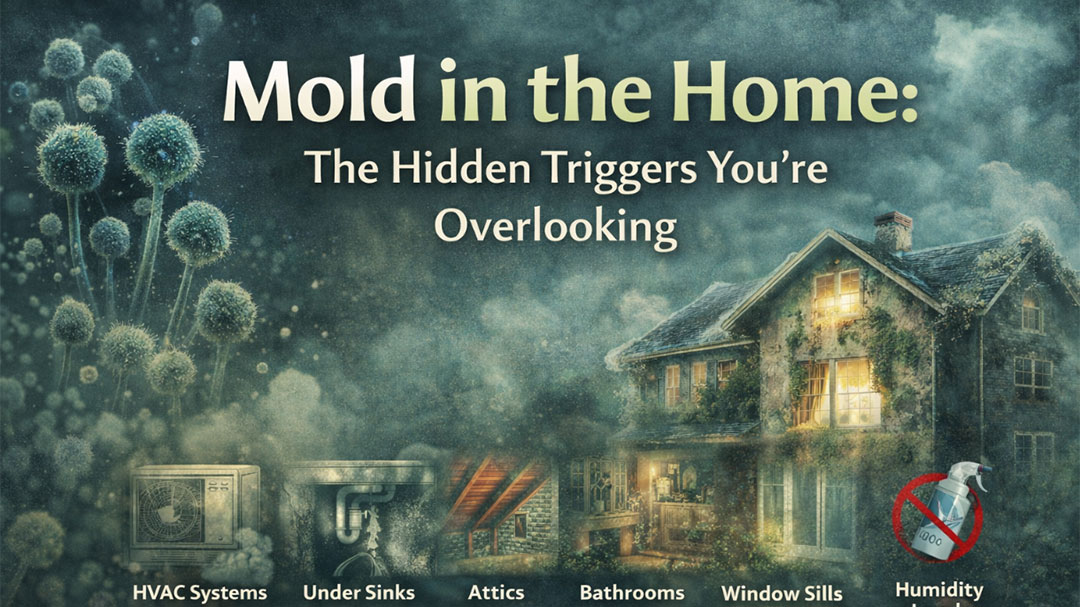
Where mold actually hides
Mold doesn’t care if your house is old or new, it thrives anywhere moisture exists — and moisture is far more common than people realize.
Common hiding places include:
HVAC systems
Your air conditioning system can distribute spores and mycotoxins throughout the entire home.
Under sinks
Small leaks that go unnoticed for months create ideal mold environments.
Behind baseboards
Even minor water intrusion can get trapped inside walls.
Attics
Poor ventilation + humidity buildup = mold growth.
Bathrooms
Steam + poor airflow make this a frequent hotspot.
Window sills
Condensation over time can lead to hidden growth around frames.
You don’t have to see mold for it to impact you. Often, it’s in the dust and air long before it’s visible.
Humidity levels matter more than you think
Mold thrives when indoor humidity stays above 50–60%.
Many homes in Florida (and other humid climates) sit at levels high enough to support mold growth without homeowners realizing it.
This is why managing humidity isn’t optional, it’s foundational.
Dehumidifiers, proper ventilation, and monitoring indoor levels can make a massive difference in long-term exposure.
Why air fresheners can make symptoms worse
If you’re experiencing:
- headaches
- sinus congestion
- brain fog
- fatigue
- nausea
Masking the smell with plug-ins or sprays can actually worsen symptoms.
Many conventional air fresheners contain volatile organic compounds (VOCs) that add to your body’s toxic burden.
If your immune system is already overwhelmed, adding chemical fragrance only increases the load.
This is why detox doesn’t start with supplements,it starts with your environment.
ERMI vs HERTSMI testing
If mold is suspected, guessing isn’t helpful.
Two common environmental tests include:
ERMI (Environmental Relative Moldiness Index)
A DNA-based dust test that measures mold species present in a home.
HERTSMI-2
A simplified scoring system derived from ERMI that evaluates the most concerning mold species linked to chronic inflammatory illness.
Both can provide insight into what you’re actually living in.
Because again — you can’t fix what you don’t measure.
Why remediation must be done properly
Mold remediation is not:
- Spraying bleach
- Painting over damage
- Running an air purifier and hoping for the best
Improper remediation can make exposure worse.
When mold is disturbed without containment, spores spread throughout the home — leading to cross contamination.
Proper remediation should include:
- Source identification
- Moisture correction
- Containment
- HEPA filtration
- Removal (not just treatment) of contaminated materials
Shortcuts create long-term problems.
When to remediate vs when to move
This is one of the hardest conversations.
Sometimes remediation is possible and effective. Other times, structural damage or ongoing moisture issues make complete remediation unrealistic.
The decision depends on:
- Severity of contamination
- Structural integrity
- Health sensitivity of occupants
- Budget + feasibility
There isn’t a one-size-fits-all answer — but pretending the problem isn’t there rarely works.
The nervous system + chronic exposure
Mold doesn’t just affect the immune system.
Chronic exposure keeps the nervous system in a constant state of threat.
This can look like:
- Anxiety
- Sleep disruption
- Hypervigilance
- Fatigue
- Mood swings
When the body feels unsafe in its environment, it shifts into survival mode and healing becomes much harder.
Again — detox doesn’t begin in the supplement cabinet.
It begins in the space you live in every day.
Why this matters right now
We’re not starting with restrictive diets or expensive protocols.
We’re starting with the environment.
Each week, we’ll walk through one area of the home:
- Air
- Water
- Kitchen
- Bedroom
- Cleaning products
- Hidden moisture
Because sustainable detox starts with removing the stressors — not just trying to “push toxins out.”
Ready to figure out where to start?
If you suspect mold could be affecting your health, or you’re unsure whether your environment is contributing to your symptoms, don’t try to navigate it alone.
Schedule a complimentary 10-minute commitment call with our team.
You don’t have to guess.
Let’s figure out what your body has been trying to tell you — and build a plan from there.